
30 seconds summary
- Natural remedies can help manage common household pests without relying heavily on chemicals.
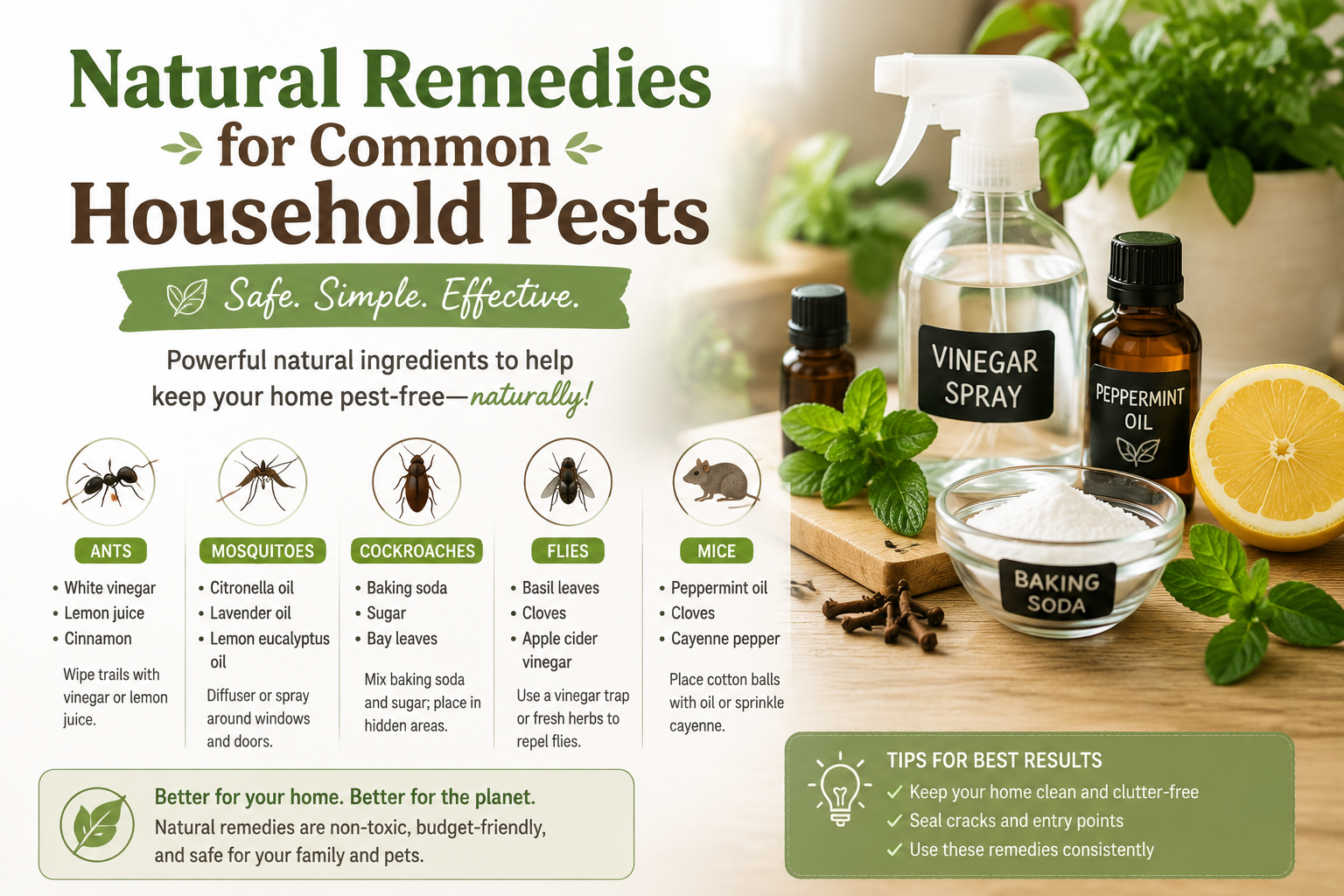
- For ants, use vinegar, lemon juice, or cinnamon to disrupt their trails. Mosquitoes can be discouraged with plants like citronella, basil, or lavender. Diatomaceous earth can help control insects like cockroaches and fleas, while peppermint oil may repel spiders and some bugs.
- Keeping your home clean, sealing food containers, and blocking entry points are the best natural defenses for a pest-free environment.
Household pests are a common challenge faced by families around the world. Ants in the kitchen, mosquitoes near standing water, cockroaches hiding in dark corners, flies around food, and moths damaging clothing or stored items can quickly become frustrating problems. While commercial pesticides are widely available, many people prefer natural remedies because they reduce exposure to harsh chemicals, protect indoor air quality, and provide environmentally friendly alternatives. Natural pest control focuses on prevention, cleanliness, and using substances that discourage pests without creating unnecessary risks for humans, pets, and beneficial insects.
A home does not need to rely entirely on chemical sprays to remain comfortable and pest-free. Many traditional methods use ingredients that are already found in kitchens, gardens, or local stores. Essential oils, herbs, vinegar, baking soda, citrus peels, spices, and simple household habits can all play a role in managing unwanted insects. However, natural remedies work best when combined with good sanitation practices and efforts to remove the conditions that attract pests in the first place.
Understanding Why Household Pests Enter Homes
Before choosing a remedy, it is important to understand why pests appear. Most household insects and small animals enter homes because they are searching for three basic necessities: food, water, and shelter. A kitchen with uncovered food, leaking pipes, or crumbs on countertops can become an attractive environment for ants, cockroaches, and rodents. Damp areas such as bathrooms, basements, and laundry rooms may encourage insects that thrive in moisture.
Temperature and humidity also influence pest activity. Many insects reproduce more quickly in warm, humid conditions. Maintaining a balanced indoor environment can help reduce pest problems. Devices such as an air humidifier can be useful during dry seasons by improving comfort and preventing overly dry air, but excessive humidity may encourage certain pests. For pest prevention, humidity levels should generally remain moderate rather than creating damp conditions.
A successful natural pest-control approach begins with identifying the specific pest and understanding its habits. Different pests respond to different solutions. A remedy that discourages ants may not be effective against mosquitoes or pantry moths. Observation is the first step toward choosing the right strategy.
Natural Remedies for Ants
Ants are among the most common household pests because they are highly organized and constantly searching for food sources. Once one ant discovers a food supply, it can leave a scent trail that guides many others into the home. Natural ant control focuses on removing these trails and creating barriers.
One simple remedy is white vinegar mixed with water. Cleaning countertops, windowsills, and areas where ants travel with a vinegar solution can help remove scent trails. Although vinegar does not kill entire colonies, it can make the area less attractive and interrupt their navigation.
Cinnamon is another traditional ant deterrent. Many people sprinkle cinnamon powder near entry points, cracks, or areas where ants appear. The strong smell may interfere with their ability to follow scent paths. Ground cloves, peppermint oil, and citrus peels can serve a similar purpose.
The most effective long-term solution is prevention. Food should be stored in sealed containers, spills should be cleaned quickly, and cracks around doors or windows should be sealed. Natural repellents are most successful when ants are denied access to the resources they need.
Managing Cockroaches Naturally
Cockroaches are difficult pests because they are adaptable and can survive in many environments. They are attracted to food scraps, moisture, and hidden spaces. Natural control methods focus on making the home less appealing.
Baking soda is sometimes used as part of a homemade cockroach remedy. When combined with a food source such as sugar, it may attract cockroaches. However, household remedies alone may not eliminate a serious infestation. Reducing hiding places and removing food sources are more reliable strategies.
Bay leaves, cucumber peels, and peppermint oil are often mentioned as natural cockroach deterrents. These methods may discourage cockroaches temporarily because of their strong scents, but they should be combined with proper cleaning.
Moisture control is especially important. Cockroaches are attracted to damp areas, including under sinks and behind appliances. Fixing leaks, drying wet areas, and improving ventilation can make these spaces less suitable. An air humidifier should be used carefully because maintaining unnecessarily high humidity may create conditions that some pests prefer. A balanced indoor climate supports comfort while reducing pest-friendly environments.
Natural Ways to Repel Mosquitoes
Mosquitoes are not only annoying; they can also carry diseases in many parts of the world. Reducing mosquito populations requires preventing breeding areas and limiting exposure.
The most important natural prevention method is removing standing water. Mosquitoes lay eggs in small amounts of stagnant water found in buckets, plant trays, clogged gutters, and outdoor containers. Regularly emptying and cleaning these areas can greatly reduce mosquito numbers.
Plants such as citronella grass, lavender, basil, and mint are commonly associated with mosquito prevention. Their fragrances may help discourage mosquitoes in certain areas. Essential oils made from these plants can also be used in diluted forms for temporary outdoor protection.
Screens on windows and doors provide a physical barrier without chemicals. Fans can also help because mosquitoes are weak fliers and may struggle in moving air. Keeping outdoor areas clean and avoiding unnecessary water collection are among the most effective natural strategies.
Controlling Flies Without Chemicals
Flies are attracted to food waste, garbage, and organic materials. Keeping flies away begins with proper sanitation.
A simple homemade fly trap can be made using apple cider vinegar and a small amount of dish soap. The smell attracts flies, while the soap reduces surface tension and prevents escape. This method can help reduce small numbers of flies.
Basil plants near windows and kitchen areas are traditionally believed to discourage flies because of their strong scent. Clove-studded citrus fruits are another old-fashioned method used to make areas less appealing to flies.
The best prevention remains cleanliness. Trash should be removed regularly, food should be covered, and kitchen surfaces should be wiped frequently. Flies reproduce quickly, so addressing the source is more effective than only treating visible insects.
Natural Solutions for Pantry Pests
Pantry pests such as grain moths, beetles, and weevils can contaminate stored foods. They often arrive inside packages purchased from stores and can spread quickly.
One natural prevention method is storing grains, flour, rice, and cereals in airtight glass or plastic containers. This removes access to food sources and prevents insects from spreading.
Bay leaves are commonly placed inside pantry containers or cupboards as a traditional deterrent. While their effectiveness varies, many people use them because they are inexpensive and safe when used correctly.
Regular inspection is essential. Expired products, open packages, and forgotten items should be checked frequently. Cleaning shelves with vinegar and removing food particles can help prevent future problems.
Natural Remedies for Spiders
Spiders are generally beneficial because they eat other insects, but many people prefer to keep them away from living areas. Natural spider control focuses on reducing the insects that attract them.
Peppermint oil diluted with water is often used as a spider-repelling spray around windows, corners, and entry points. Citrus scents are also commonly used because many spiders appear to avoid strong fragrances.
Removing clutter reduces hiding places. Regular vacuuming of corners, ceilings, and storage areas can remove webs and discourage spiders from settling indoors.
Because spiders often enter homes in search of prey, controlling other insect populations naturally can reduce spider activity as well.
Dealing with Fleas Naturally
Fleas are common problems in homes with pets. They can cause discomfort for animals and may spread throughout carpets, furniture, and bedding.
Regular vacuuming is one of the most important natural methods for flea control. Vacuuming carpets, rugs, and furniture removes adult fleas, eggs, and larvae. Vacuum bags should be emptied or disposed of carefully to prevent reinfestation.
Washing pet bedding in hot water can also help. Some people use diluted essential oils around the home, but caution is needed because certain oils can be harmful to animals. Natural does not always mean harmless, and pet safety should always be considered.
Maintaining clean sleeping areas and treating pets with veterinarian-approved methods are important parts of a complete flea-control plan.
The Role of Humidity and an Air Humidifier in Pest Prevention
Indoor humidity has a major influence on household conditions. While an air humidifier can improve comfort by adding moisture to dry indoor air, it must be used responsibly. Excess moisture can encourage mold growth and create environments where certain pests, such as dust mites and some insects, thrive.
The goal is balance. Extremely dry air can cause discomfort, including dry skin, irritated throats, and respiratory discomfort. However, overly humid rooms may attract moisture-loving pests. Monitoring humidity levels and using a humidifier only when needed can help maintain a healthier environment.
Humidifiers should be cleaned regularly because stagnant water inside the device can encourage microbial growth. Dirty humidifiers may spread unwanted particles into the air. Proper maintenance includes changing water frequently, cleaning components according to manufacturer instructions, and avoiding excessive humidity.
Although an air humidifier is not a pest-control device, it contributes to overall indoor environmental management. A comfortable, well-maintained home environment supports prevention by reducing conditions that allow certain pests to thrive.
Essential Oils as Natural Pest Deterrents
Essential oils are popular natural pest-control options because many insects dislike strong plant-based aromas. Peppermint, eucalyptus, tea tree, lavender, citronella, and lemongrass oils are commonly used.
These oils can be diluted with water and applied as sprays around entry points, windows, and problem areas. They should always be used carefully, especially around children and animals. Some essential oils may cause irritation or be unsafe for pets.
Essential oils generally act as repellents rather than complete solutions. They may discourage pests temporarily but will not replace proper cleaning, sealing cracks, and removing food sources.
The Importance of Prevention
The strongest natural pest-control method is prevention. A clean, organized home is naturally less attractive to pests. Small daily habits can prevent major infestations.
Food should be stored securely, dishes should not be left dirty overnight, and garbage should be managed properly. Water leaks should be repaired quickly because even small moisture sources can attract insects.
Doors, windows, and cracks should be inspected regularly. Many pests enter through surprisingly small openings. Sealing these areas reduces the need for any pest-control product.
Outdoor areas also matter. Keeping gardens maintained, trimming plants away from walls, and removing piles of leaves or debris can reduce pest habitats near the home.
Combining Natural Methods with Responsible Pest Management
Natural remedies are valuable tools, but expectations should be realistic. A few drops of essential oil or a household ingredient may help discourage pests, but severe infestations may require professional assistance.
The best approach combines several strategies: prevention, cleanliness, natural deterrents, and careful monitoring. Integrated pest management focuses on reducing pest populations while minimizing unnecessary chemical use.
When using natural remedies, research is important. Some substances that are safe for humans may be harmful to pets or plants. Every household has different needs, so methods should be chosen carefully.
Environmental Benefits of Natural Pest Control
Natural pest-control methods can reduce reliance on synthetic chemicals and support a healthier environment. Many pesticides can affect beneficial insects, contaminate water sources, and contribute to chemical exposure indoors.
Using simple household remedies encourages sustainable habits. Growing herbs, reducing waste, storing food properly, and maintaining a clean home all contribute to a more environmentally responsible lifestyle.
Natural methods also encourage awareness. Instead of simply eliminating pests after they appear, homeowners learn why pests enter and how to prevent problems before they begin.
Conclusion
Natural remedies for common household pests offer practical ways to create a cleaner and more comfortable living environment. From vinegar solutions for ants and essential oils for insect deterrence to proper food storage and humidity management, many simple strategies can reduce pest problems without depending entirely on harsh chemicals.
An air humidifier can support indoor comfort when used correctly, but maintaining balanced humidity is important because excessive moisture may encourage certain pests. Like all household tools, it works best when combined with responsible maintenance and good habits.
The foundation of natural pest control is prevention. Clean spaces, sealed food containers, reduced moisture, regular inspections, and careful use of natural repellents create conditions where pests are less likely to thrive. While natural methods may not solve every infestation alone, they provide a safer and more sustainable approach to managing everyday household pests.
By understanding pest behavior and making thoughtful choices, homeowners can protect their living spaces while supporting a healthier environment for their families, pets, and the planet.