
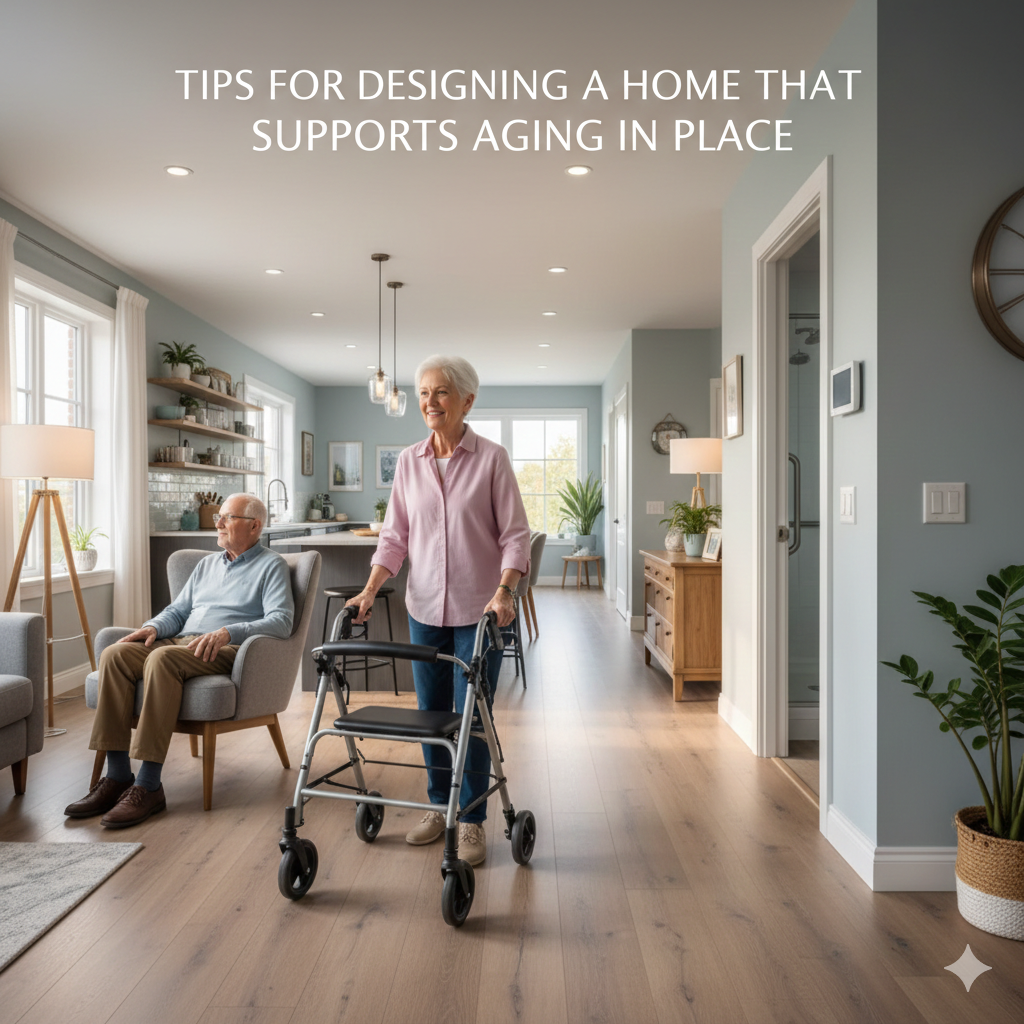
30 seconds summary
- Designing a home that supports aging in place is all about making everyday living safer, easier, and more comfortable, without sacrificing style. Start with a no-step entry, brighter lighting, and wide, clutter-free pathways to reduce trip hazards.
- Choose non-slip flooring, lever-style door handles, and rocker light switches that are easier on the hands. In the bathroom, add a walk-in shower, a handheld showerhead, grab bars, and a comfort-height toilet. In the kitchen, prioritize easy-reach storage, pull-out shelves, and appliances with simple controls.
- Finally, plan ahead with space for a main-floor bedroom, and consider smart home features like voice-controlled lights and a video doorbell to boost convenience and independence.
Designing a home that supports aging in place is about creating an environment that stays comfortable, safe, and easy to use as needs change over time. The goal isn’t to make a house feel like a clinic; it’s to build in smart, subtle features that reduce fall risk, simplify daily routines, and make the home adaptable for future mobility or vision changes. Whether you’re renovating an existing space or planning a new build, the best strategy is to focus on accessibility fundamentals, flexible layouts, and small details that make a big difference.
Start with a whole-home mindset, not one “accessible” room
A common mistake is making only a bathroom or one bedroom “senior-friendly” while leaving the rest of the home full of obstacles. Real comfort comes from consistency: wider pathways, smooth flooring transitions, good lighting, and easy-to-reach controls throughout. Think of your home as a system; if one area is difficult (like a steep entry step or a narrow hallway), it can limit how usable the rest of the house is.
A practical way to begin is to walk through your home and note “pinch points”: places where you squeeze through, step up, step down, or twist awkwardly. These are often the first problem areas when balance, strength, or vision changes.
Prioritize no-step entry and easy navigation
One of the most impactful improvements is creating at least one no-step entrance. A single step can become a major barrier for someone using a cane, walker, or wheelchair, and it increases fall risk even for people who are otherwise steady. If your home has stairs at every entry, consider:
- A gently sloped walkway (preferred over a ramp that feels temporary)
- A garage entry that’s regraded or adjusted to eliminate a step
- A small exterior platform and ramp with proper handrails and a non-slip surface
Once inside, navigation should feel intuitive and hazard-free. Ideally, doorways and hallways are wide enough for comfortable movement. Even if you don’t widen everything, widening a few key doors, the primary bedroom, bathroom, and the route from entry to kitchen, can dramatically increase future usability.
Choose flooring that’s stable, smooth, and low-maintenance
Flooring is a safety decision as much as a style decision. Slips and trips are among the biggest risks at home, so aim for:
- Non-slip surfaces, especially in kitchens, bathrooms, and entries
- Minimal transitions between rooms (avoid raised thresholds)
- Low-pile carpet if you prefer carpet, because thick plush carpet can grab toes or impede walkers
- Matte finishes to reduce glare, which can be disorienting
If you love area rugs, keep them, but secure them with non-slip backing, and avoid curled edges. Better yet, use rugs only in low-traffic areas and keep walking paths clear.
Make lighting bright, even, and layered
Lighting needs increase with age. A room that feels “cozy” to one person can feel dim and unsafe to another. You want layered lighting, ambient, task, and accent, to reduce shadows and improve depth perception.
Key upgrades include:
- Brighter overhead lighting with diffusers to reduce glare
- Task lighting under kitchen cabinets and at reading spots
- Motion-sensor lighting in hallways, bathrooms, and closets
- Night lights or toe-kick lighting along routes to the bathroom
Also consider contrasting colors in key areas. For example, a light switch plate that blends into the wall can be hard to find; a slightly contrasting plate is easier. The same goes for stair edges, countertops, and door frames.
Create a main-level “life zone”
If your home has multiple floors, plan for a lifestyle that can function comfortably on one level. The ideal setup is:
- A bedroom (or adaptable room) on the main floor
- A full bathroom on the main floor
- Laundry access on the main floor (or at least a feasible plan)
- A kitchen that’s easy to use without climbing stairs
Even if you don’t need this today, setting up the infrastructure, like framing for a future stacked washer/dryer closet, can save major hassle later.
Design kitchens for reach, safety, and flexibility
The kitchen is one of the most used and most accident-prone spaces. A good aging-friendly design reduces reaching, bending, and carrying heavy items. Consider:
Layout and circulation
- Clear walking space between counters and islands
- Avoid sharp corners that create tight turns
Storage
- Pull-out shelves and drawers instead of deep cabinets
- Lazy Susans or corner pull-outs
- Frequently used items are stored between shoulder and knee height
Counters and work zones
- Multiple work surfaces, including a slightly lower prep area if desired
- A landing zone next to the stove and microwave to set hot items down immediately
Appliances
- Side-opening oven doors or wall ovens at an accessible height
- Induction cooktops (cooler surface reduces burn risk)
- Lever-style or touch faucets, and anti-scald settings
Small changes matter too: D-shaped cabinet pulls are easier than tiny knobs, and a good anti-fatigue mat can reduce discomfort, just make sure it has a beveled edge to prevent tripping.
Bathrooms: focus on preventing falls and improving usability
Bathrooms are the highest-risk rooms for falls because of water, hard surfaces, and tight space. The best bathroom upgrades combine safety with a clean look:
Shower and tub
- Curbless (zero-threshold) shower if possible
- Slip-resistant shower floor tile
- A built-in bench or a sturdy folding seat
- A handheld showerhead with an adjustable bar
Grab bars (done right)
- Install blocking in walls so grab bars can be added securely anywhere later
- Use stylish grab bar options that match fixtures (many look like towel bars)
Toilet
- Comfort-height toilet or a compatible riser
- Space beside the toilet for easier transfers if needed
Vanity and sink
- Good lighting at the mirror
- Lever handles
- Plenty of knee clearance if future seated use is possible
Also consider an easy-to-reach storage niche for toiletries in the shower—people lose balance when twisting or reaching for soap.
Plan for stairs, either improve them or reduce reliance on them
If you have stairs, make them safer now:
- Add sturdy handrails on both sides where possible
- Improve lighting and add visible stair-edge contrast
- Fix uneven treads, squeaks, or loose carpeting
- Avoid clutter on steps (even one item can cause a fall)
If you’re planning long-term, consider whether a stair lift could be added later. Even if you don’t install it now, leaving clear wall space and ensuring the stair structure can accommodate it helps. In new builds or major remodels, a more future-proof approach is to plan a location where a small residential elevator could be installed later (or at least a stacked closet shaft).
Use hardware that’s easier for hands and joints
Arthritis, reduced grip strength, or general stiffness can turn everyday actions into challenges. Swap out small knobs and tight turns for easier options:
- Lever door handles instead of round knobs
- Rocker or touch light switches instead of tiny toggles
- Smart locks or keypads to reduce fumbling with keys
- Pull-style cabinet handles that are easy to grasp
These upgrades are relatively inexpensive and make the home friendlier for everyone, not just older adults.
Improve safety with “quiet” tech
Technology can support independence without being intrusive. The best aging-supportive tech is simple, reliable, and easy to maintain:
- Smart lighting (voice or motion) for nighttime trips
- Video doorbells for safer door answering
- Smart thermostats with big, readable interfaces
- Leak detectors under sinks and near water heaters
- Stove shutoff devices or timers to reduce fire risk
- Medical alert systems (wearable or voice-activated options)
Avoid overcomplicated systems that require constant updates or multi-step troubleshooting. If a feature isn’t easy to use on a bad day, it won’t be used.
Design for acoustics and communication
Hearing changes can make a home feel isolating. Simple acoustic improvements help:
- Use soft materials strategically (curtains, upholstered furniture) to reduce echo
- Reduce background noise from HVAC with proper servicing and quieter fans
- Choose doorbells and alarms with adjustable volume and visual alerts
- Consider intercom or voice assistant features to communicate across rooms
This is especially helpful in larger homes where shouting upstairs or across rooms becomes frustrating.
Think about maintenance as part of accessibility
A home that supports independence should also reduce the burden of upkeep. Design choices that lower maintenance can extend how long someone comfortably lives at home:
- Durable exterior materials that don’t require frequent painting
- Easy-clean surfaces in kitchens and bathrooms
- Landscaping designed for low effort: drip irrigation, fewer high-maintenance plants
- Storage for tools and supplies at easy-to-reach heights
- Centralized shutoffs (water, gas) that are accessible and clearly labeled
If you’re renovating, consider placing important mechanical equipment (like filters or electrical panels) where they can be reached without crawling into tight spaces.
Create restful, accessible bedrooms
Bedrooms should be calm and easy to move around in. Key considerations include:
- Clear pathways on both sides of the bed
- Bed height that makes sitting and standing easy (not too low)
- Light switches accessible from the bed
- Closets with lower rods or adjustable systems
- A chair or bench for dressing
- Nearby charging and storage for a phone, glasses, and medication
If you’re planning ahead, having the primary bedroom on the main floor is one of the biggest contributors to long-term comfort.
Make emergency planning part of the design
Supporting independence also means planning for the unexpected. Build in features that make emergencies easier to handle:
- Bright house numbers are visible from the street
- Exterior lighting at entries and walkways
- Clear paths for responders
- Backup power options for critical needs (even a small battery backup for internet/phone can help)
- A designated spot for medical info and emergency contacts
Inside the home, consider where someone could safely sit and rest if they feel dizzy. Having sturdy seating in key areas can prevent falls.
Conclusion
If you’re overwhelmed, prioritize changes that offer the biggest safety and usability gains:
- Improve lighting and reduce tripping hazards (rugs, clutter, thresholds).
- Create a no-step entry if possible.
- Upgrade the bathroom for fall prevention (shower access, grab bars, non-slip surfaces).
- Make a main-level living plan (sleep, bathe, eat, and do laundry without stairs if possible).
- Choose easy-to-use hardware (levers, pulls, rocker switches).
Designing a home for the long run doesn’t mean predicting every future need. It means building a supportive foundation, safe movement, clear visibility, easy operation, and adaptable spaces. Done well, it helps people stay confident in their routines, connected to their neighborhood, and comfortable in the place that feels most like home.