
30 seconds summary
- Choosing the ideal tile style for your kitchen backsplash is key to creating a beautiful, functional space. From rustic to modern designs, the right tile material, whether ceramic, natural stone, glass, or metal, can set the tone for your kitchen. Rustic styles often feature earthy, textured tiles, while modern designs favor sleek, minimalist options.
- It’s important to coordinate the backsplash with your kitchen floor tiles for a cohesive look.
- Whether you opt for warm, vintage elements or a contemporary, polished aesthetic, the right tile can enhance both the style and practicality of your kitchen.
When it comes to designing a kitchen, one of the most transformative elements is the backsplash. The kitchen backsplash is more than just a practical feature to protect your walls from spills and splatters; it can be a statement piece that sets the tone for your entire kitchen design. The backsplash can also act as a bridge between the countertop, cabinetry, and flooring, making it a critical part of your kitchen’s visual appeal. Selecting the right tile style for your kitchen backsplash requires a careful balance between aesthetics, functionality, and durability. With the wide variety of materials, colors, patterns, and textures available, the decision can feel overwhelming, especially when you’re torn between rustic charm and sleek modern design.
In this article, we’ll explore how to choose the ideal tile style for your kitchen backsplash, taking into account various design styles, trends, and practical considerations. We’ll also discuss how kitchen tiles for backsplashes & floors can work together seamlessly to create a cohesive and well-thought-out design.
Understanding the Role of a Kitchen Backsplash
A kitchen backsplash is a protective barrier that extends from the countertop to the underside of the upper cabinets. It serves as a shield against cooking splatters, grease, and stains while also adding a layer of style and visual interest to the kitchen. Backsplashes often receive more attention than other elements of the kitchen because they’re typically installed in the heart of the cooking area, making them an ideal place to infuse personality into the design.
The backsplash can serve as a complement to other design elements or as a focal point that draws the eye. While choosing the right backsplash tile style is essential for aesthetics, it’s also important to think about how it will function over time. The right tile material can make cleaning easier, resist moisture, and maintain its beauty despite the wear and tear of daily cooking activities.
Rustic vs. Modern: Defining the Two Styles
Before diving into tile selection, it’s helpful to understand what defines rustic and modern kitchen styles. Both offer unique charm but have distinct characteristics.
Rustic Style
Rustic kitchens evoke a warm, inviting, and lived-in atmosphere. This style often draws inspiration from nature and features earthy tones, natural materials, and vintage elements. It’s all about creating a cozy, charming environment that feels authentic and organic. Common elements of rustic kitchens include wood beams, distressed furniture, stone countertops, and antique accents.
In terms of tile, rustic backsplashes typically use materials like natural stone, terracotta, and even reclaimed wood. Textures and patterns are often more irregular and varied, adding to the charm and character of the space. Rustic tiles can have a weathered, worn appearance that contributes to the overall vintage, farmhouse, or cottage-style aesthetic.
Modern Style
Modern kitchen design is characterized by clean lines, minimalism, and sleek, sophisticated materials. It embraces a “less is more” approach, focusing on simplicity and function. Modern kitchens often feature high-tech appliances, streamlined cabinetry, and a monochromatic or neutral color palette. Materials like glass, stainless steel, and polished stone are common in modern kitchen design.
Modern tile backsplashes are often smooth, uniform, and highly polished. Subway tiles, large-format tiles, or even glass tiles are popular choices. The color schemes are typically muted with occasional pops of color, often in the form of bold patterns or geometric designs. The emphasis is on creating a contemporary, chic, and efficient space that feels fresh and airy.
Tile Materials: Choosing the Right Texture and Finish
The material you choose for your kitchen backsplash plays a significant role in both the visual appeal and durability of the space. Below are some of the most popular tile materials for kitchen backsplashes, including both rustic and modern options.
Ceramic and Porcelain Tiles
Ceramic and porcelain tiles are the most common options for kitchen backsplashes because of their versatility, durability, and ease of maintenance. Both materials come in a wide range of colors, sizes, and finishes, making them adaptable to both rustic and modern designs.
- Rustic Use: Rustic kitchens can benefit from ceramic tiles that mimic the look of natural stone, wood, or terracotta. The textured finishes on some porcelain tiles can give a more earthy, handcrafted vibe that aligns well with a rustic aesthetic.
- Modern Use: For modern kitchens, smooth, glossy ceramic or porcelain tiles in neutral tones (such as white, gray, or black) create a sleek and sophisticated look. Large-format tiles are especially popular in modern designs for their clean, uninterrupted surfaces.
Natural Stone Tiles
Natural stone tiles such as granite, marble, limestone, and slate add luxury and timeless appeal to any kitchen. These materials are durable and can handle the heat and moisture typically present in a kitchen. The unique patterns and veining found in natural stone also make each tile one-of-a-kind.
- Rustic Use: Stone tiles with a rugged, weathered finish fit perfectly into rustic kitchens, as they complement the earthy and organic aesthetic. Slate and limestone, for instance, have a natural texture that enhances a rustic farmhouse or cottage vibe.
- Modern Use: While natural stone can be used in modern kitchens, it’s often paired with sleek finishes. Polished marble or granite, for example, works beautifully in contemporary kitchens, offering a balance of sophistication and luxury. The clean lines and shiny surface make them an ideal choice for modern spaces.
Glass Tiles
Glass tiles are a fantastic choice for modern kitchens due to their glossy, reflective surfaces. Glass tiles come in a variety of colors and finishes, from frosted to transparent, and can even be custom-made to suit specific design preferences.
- Rustic Use: Glass tiles are less commonly associated with rustic kitchens but can still be used creatively. For example, frosted or matte glass tiles in soft, earthy tones can add a subtle modern twist to a rustic design without losing the organic feel.
- Modern Use: Glass tiles are perfect for modern kitchens, as their smooth, reflective surfaces contribute to the sleek, clean look of contemporary spaces. Subway-style glass tiles or even mosaic patterns can bring an added dimension of style to a modern backsplash.
Metal Tiles
Metal tiles, such as stainless steel, copper, and brass—are increasingly popular in modern kitchen designs. These tiles provide a bold, industrial look and work well in kitchens that feature metal accents or appliances.
- Rustic Use: While metal tiles are more often associated with modern kitchens, they can be incorporated into a rustic space if paired with the right materials. For example, weathered copper tiles can bring a vintage touch to a farmhouse-style kitchen.
- Modern Use: In modern kitchens, metal tiles are often used to create an ultra-sleek, futuristic aesthetic. Stainless steel tiles are especially popular for a clean, industrial look that pairs well with high-tech appliances.
Subway Tiles
Subway tiles, particularly in a classic white finish, are a timeless and versatile choice for kitchen backsplashes. While they are most commonly seen in modern kitchens, they can also be used in rustic designs if paired with the right accessories.
- Rustic Use: Subway tiles with a distressed finish or in muted, earthy colors can lend themselves to rustic aesthetics. Pairing them with wooden cabinets or open shelving can help achieve a cozy, vintage farmhouse look.
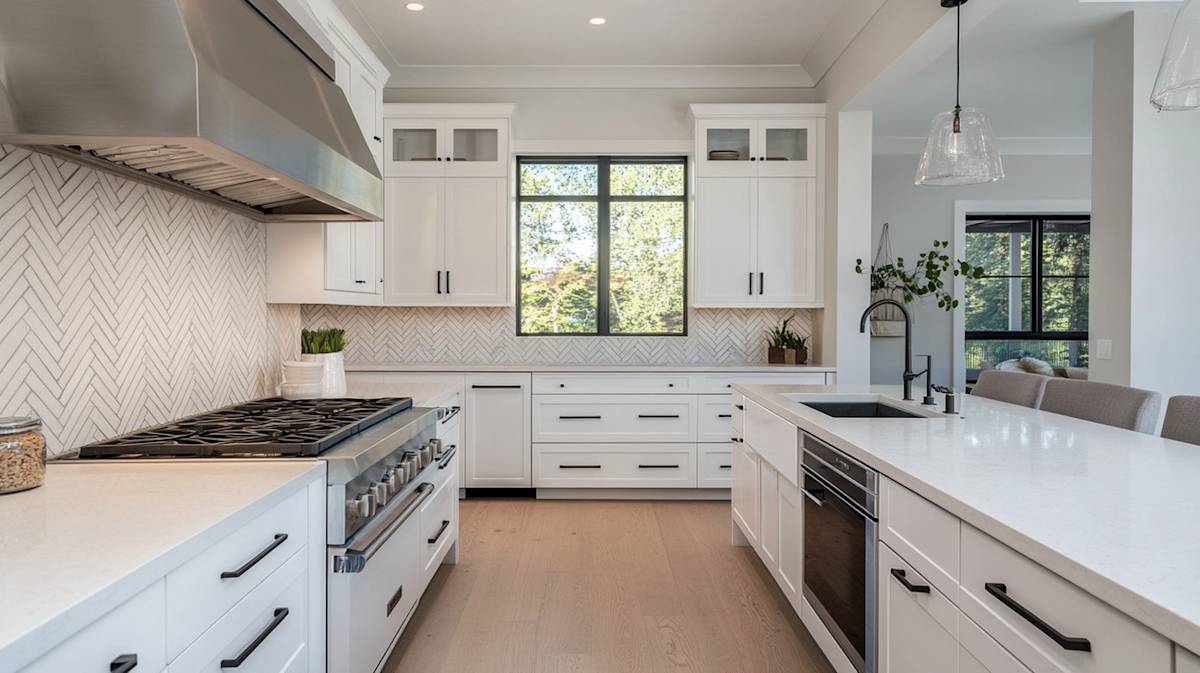
- Modern Use: Subway tiles are an iconic element in modern kitchens, where they are often laid in a herringbone or staggered pattern for a contemporary twist. Their clean lines and minimalist design make them perfect for modern, streamlined spaces.
Coordinating Kitchen Tiles for Backsplashes & Floors
When designing your kitchen, it’s essential to ensure that the backsplash and flooring complement one another. While the two should work together visually, they don’t need to match exactly. Here are a few tips for coordinating kitchen tiles for backsplashes and floors:
Complementing Materials and Finishes
If you choose a rustic tile for the backsplash, you can balance it with a modern, polished floor tile to create contrast. For instance, you might select a natural stone or terracotta tile for the backsplash and pair it with a sleek ceramic tile floor. This creates an interesting dynamic where the rustic backsplash stands out against the polished floor, highlighting each style’s strengths.
On the other hand, if you have a modern backsplash with clean lines and a neutral color palette, you can choose a modern floor tile in a similar color family to create a cohesive look. The floor should not overpower the backsplash but rather complement it. Large-format tiles are a popular option for modern floors, creating an expansive, seamless effect.
Consistent Color Scheme
Whether you’re going for rustic or modern, it’s important to choose a consistent color scheme throughout your kitchen. For example, in a rustic kitchen, you might opt for earthy tones like browns, creams, and soft greens for both the backsplash and flooring. In a modern kitchen, you might stick with neutral tones like whites, grays, and blacks to maintain a cohesive aesthetic.
Creating Visual Interest
To add depth and interest, consider mixing textures and finishes. For example, a glossy, smooth backsplash tile can contrast beautifully with a matte, textured floor tile. The combination creates a layered effect, making both the backsplash and flooring visually dynamic without overwhelming the space.
Conclusion
The ideal kitchen tile style for your backsplash will ultimately depend on your personal preferences, the overall design theme of your kitchen, and the functional needs of the space. Rustic and modern designs each have their unique appeal, and both can be enhanced by thoughtful tile selections. From natural stone to glossy ceramic tiles, there’s a vast array of materials and finishes to choose from. Additionally, coordinating your kitchen tiles for backsplashes & floors will ensure a seamless and harmonious design.
Whether you prefer the warmth and charm of rustic tiles or the sleek sophistication of modern designs, the right choice of backsplash tile will elevate your kitchen and reflect your individual style. Take your time to explore different options, and remember that your backsplash is not only a practical feature but also an opportunity to create a beautiful focal point that enhances the heart of your home.
 homeglobepro