
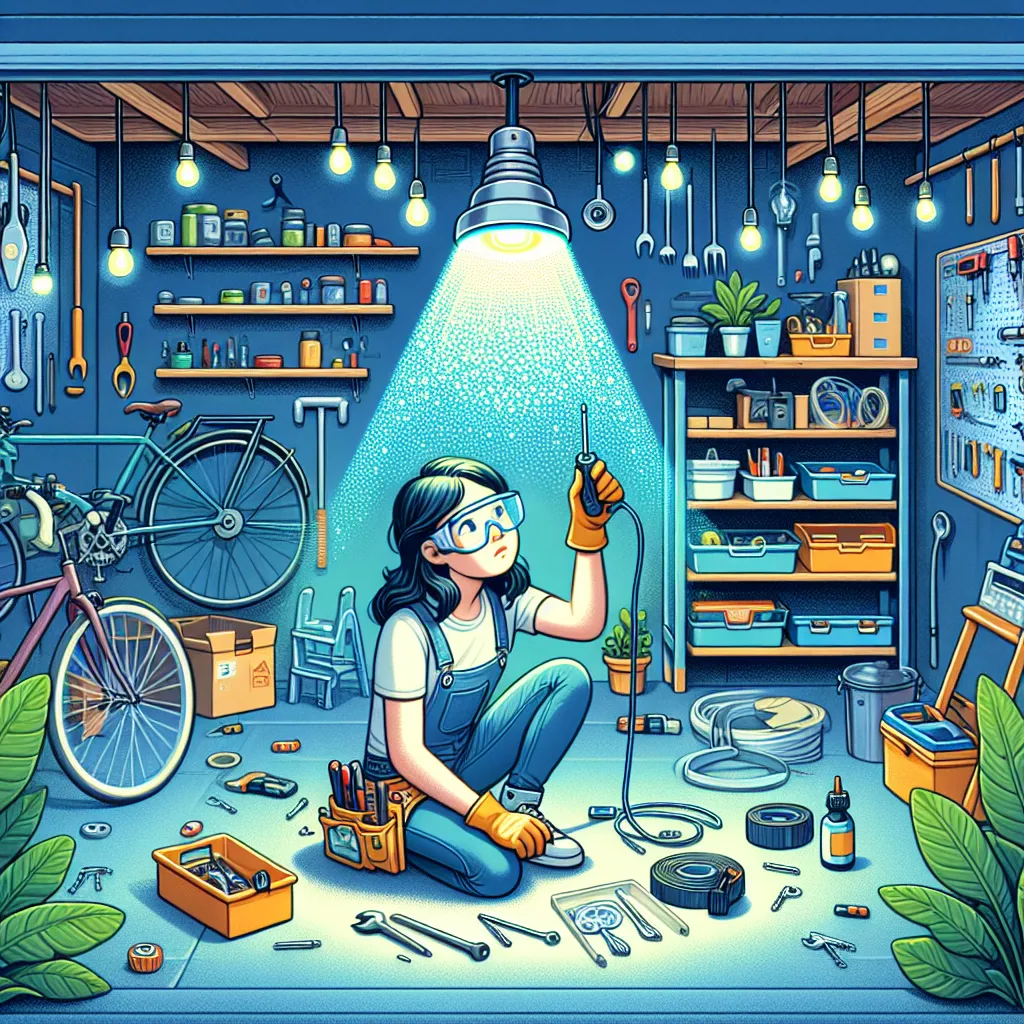
The garage, often overlooked in home lighting schemes, serves as a workshop, storage area, and sometimes even an extension of our living space. Traditional incandescent, halogen, or fluorescent lighting in this environment frequently falls short, offering inadequate brightness, poor color rendering, and significant energy consumption. Transitioning to LED (Light Emitting Diode) lighting is not merely an upgrade; it’s a transformation that enhances functionality, safety, and efficiency. This expert DIY guide will walk you through the process of replacing your existing garage lighting with a superior LED system.
The Case for LED in Your Garage
Before delving into the how-to, understanding the compelling advantages of LED technology specific to a garage environment is crucial:
- Exceptional Energy Efficiency: LEDs consume significantly less power than traditional bulbs, leading to substantial savings on your electricity bill.
- Unrivaled Longevity: LED fixtures can last 25,000 to 50,000 hours or more, drastically reducing the frequency of bulb changes, especially in hard-to-reach garage ceilings.
- Instant-On and No Flickering: Unlike fluorescent lights that can hum and flicker, LEDs provide instant, full brightness, even in cold temperatures, which are common in garages.
- Superior Durability: LEDs are solid-state devices with no filaments or glass tubes to break, making them highly resistant to vibration and impact – ideal for a busy garage.
- Excellent Cold Weather Performance: LEDs operate efficiently in cold temperatures, unlike fluorescents which diminish in output.
- Improved Visibility and Safety (CRI): High-quality LEDs offer a high Color Rendering Index (CRI), typically 80 or above, which means colors appear truer to life. This is vital for tasks like paint matching, identifying wires, or simply working safely.
Planning Your LED Garage Lighting System
A successful LED upgrade begins with thorough planning. Consider the specific functions of your garage to tailor the lighting solution effectively.
1. Assess Your Current Lighting
Begin by identifying the type and quantity of your existing fixtures:
- Incandescent/Halogen: Typically screw-in bulbs (E26/E27 base) in simple fixtures.
- Fluorescent Tube: Long tube fixtures, usually T8 or T12, requiring a ballast.
- High-Intensity Discharge (HID): Less common in residential garages, but found in larger spaces (mercury vapor, metal halide, high-pressure sodium). These require a ballast and ignitor.
2. Determine Your Lighting Needs
Effective garage lighting employs a layered approach:
- General Ambient Lighting: This is your primary lighting. Aim for 50-70 lumens per square foot for basic garages, and 70-100 lumens per square foot for workshops or detailed task areas. For example, a 20×20 foot (400 sq ft) garage might require 20,000 to 40,000 lumens total.
- Task Lighting: Supplemental lighting directly over workbenches, tools, or specific project areas. These fixtures should be brighter and focused.
- Accent Lighting (Optional): For highlighting specific features or for aesthetic purposes, though less common in functional garages.
3. Choosing the Right LED Fixtures
The market offers several LED options suitable for garage environments:
- Integrated LED Shop Lights/Strip Lights: These are self-contained units with integrated LED arrays, often linkable for continuous runs. They come in various lengths (2ft, 4ft, 8ft) and are highly popular for their ease of installation and bright, even light distribution.
- LED Tubes (T8/T12 Replacements): Designed to replace traditional fluorescent tubes. There are two main types:
- Ballast Bypass (Direct Wire): These tubes require removing or bypassing the existing fluorescent ballast and wiring the tombstone sockets directly to line voltage. This is generally recommended for maximum efficiency and longevity, as it eliminates a failure point (the ballast).
- Plug-and-Play (Ballast Compatible): These tubes work with existing fluorescent ballasts. While simpler to install, they are reliant on the ballast, which will eventually fail, requiring replacement of the ballast or conversion to a direct wire system.
- LED Bulbs (E26/E27 Base): For existing screw-in fixtures, you can simply replace incandescent or halogen bulbs with LED equivalents. Look for high-lumen, wide-beam angle bulbs. Corn cob style LED bulbs are particularly good for open fixtures needing omni-directional light.
- High Bay/Low Bay Fixtures: For garages with very high ceilings (12+ feet), these specialized fixtures offer powerful, wide-angle illumination.
4. Color Temperature (CCT)

Color temperature is measured in Kelvin (K) and dictates the “warmth” or “coolness” of the light.
- 2700K-3000K (Warm White): Similar to incandescent, good for living spaces, but generally too warm for task-oriented garages.
- 3500K-4000K (Neutral White): A good balance, providing clear light without being overly stark.
- 5000K-6500K (Daylight/Cool White): Mimics natural daylight and is often preferred for garages and workshops as it provides excellent clarity and contrast for detailed work. Most experts recommend 4000K-5000K for garage environments.
5. Color Rendering Index (CRI)
CRI measures how accurately a light source reveals colors compared to natural daylight. For a garage where color accuracy might be important (e.g., painting, automotive work), aim for an LED with a CRI of 80+. Higher CRI values mean more accurate color perception.
6. Layout and Placement
- Grid Pattern: For general lighting, distribute fixtures evenly across the ceiling in a grid to minimize shadows.
- Overhead Work Zones: Place fixtures directly over workbenches or primary work areas to provide shadow-free illumination.
- Wall Washing: Consider some fixtures mounted closer to walls to brighten vertical surfaces, which can make the space feel larger and better lit.
Tools and Materials You’ll Need
Having the right equipment ensures a smooth and safe installation:
- New LED Fixtures/Bulbs: Purchased based on your planning.
- Voltage Tester (Non-Contact or Multimeter): Absolutely essential for safety.
- Screwdrivers: Phillips and flathead.
- Wire Strippers/Cutters: For preparing electrical wires.
- Pliers: Needle-nose and lineman’s.
- Wire Nuts: For securely connecting electrical wires.
- Electrical Tape: For insulating connections.
- Ladder/Step Stool: Stable and appropriate height for your ceiling.
- Tape Measure: For accurate placement.
- Pencil/Marker: For marking mounting points.
- Drill with Assorted Bits: For mounting fixtures.
- Anchors/Screws: Appropriate for your ceiling material (wood joists, drywall, concrete).
- Safety Glasses: To protect your eyes from debris.
- Work Gloves: For protection and grip.
- Flashlight or Headlamp: For working in low light conditions (when power is off).
- Optional:
- Junction Boxes/Conduit: If running new wiring.
- Cable Clips/Zip Ties: For neat cable management.
- Old Fluorescent Tube Disposal Container: For proper disposal of mercury-containing tubes.
Safety First: Non-Negotiable Steps
Electrical work demands utmost caution. NEVER skip these safety steps:
- Turn Off Power at the Breaker: Locate the circuit breaker panel and switch off the breaker controlling the lights in your garage. If unsure which breaker it is, turn off the main breaker for the entire house.
- Verify Power is Off: Use a non-contact voltage tester or multimeter to confirm that there is no power at the light fixture you intend to work on. Touch the tester to the wires or the fixture itself.
- Ladder Safety: Ensure your ladder is stable on a level surface. Have a spotter if working at significant heights.
- Handle Fluorescent Tubes with Care: Old fluorescent tubes contain mercury. Avoid breaking them. Dispose of them properly according to local regulations (often at hazardous waste facilities).
- Read Manufacturer Instructions: Always follow the specific installation instructions provided with your new LED fixtures.
Step-by-Step Replacement Procedures
Here’s how to replace common garage light types with LEDs.
Procedure 1: Replacing Screw-in Incandescent/Halogen Bulbs with LED Bulbs
This is the simplest upgrade.
- Power Off: Turn off the power at the breaker and verify with a voltage tester.
- Remove Old Bulb: Carefully unscrew the existing incandescent or halogen bulb once it has cooled down.
- Install LED Bulb: Screw in the new LED bulb. Ensure it’s compatible with any existing fixture features (e.g., enclosed fixture rating, dimmer compatibility).
- Test: Turn the power back on at the breaker and test the new LED bulb.
Procedure 2: Replacing Fluorescent Tube Fixtures with LED Tubes (T8/T12)
This procedure depends on whether you choose ballast bypass or plug-and-play LED tubes.
Option A: Ballast Bypass (Direct Wire Conversion) – Recommended for efficiency and longevity
This method involves removing the ballast and wiring the sockets directly.
- Power Off: Turn off the power at the breaker and verify power is off with a voltage tester.
- Remove Old Tubes and Ballast Cover: Carefully remove the fluorescent tubes. Undo the screws or clips holding the ballast cover in place and remove it to expose the ballast and wiring.
- Disconnect and Remove Ballast:
- Identify the wires entering and exiting the ballast. Typically, there will be line (hot) and neutral wires feeding the ballast, and multiple colored wires (usually red, blue, yellow) leading from the ballast to the lamp holders (tombstones).
- Carefully cut the wires leading to the ballast.
- Unmount the ballast (it’s usually screwed in) and remove it from the fixture. Dispose of it properly.
- Rewire Tombstone Holders Directly:
- For single-ended power LED tubes: Connect the hot (black or colored) wire from your electrical supply to one end of the fixture’s tombstone sockets, and the neutral (white) wire to the other end’s sockets. You will need to consolidate the wires from multiple tombstone sockets on each end if your LED tubes require power on one end and simply provide a connection on the other. Consult your LED tube’s wiring diagram.
- For double-ended power LED tubes: Connect the hot (black) wire from your electrical supply to one tombstone socket on one side of the fixture, and the neutral (white) wire from your supply to a tombstone socket on the other side of the fixture. Ensure all tombstone sockets on the hot side are connected to the hot supply, and all on the neutral side are connected to the neutral supply. This often means splicing wires together using wire nuts.
- Crucial: Ensure all exposed wire ends are securely capped with wire nuts.
- Example (common for 4-foot tubes): Bring the line wire from your ceiling to one side of the fixture’s internal wiring (connecting to the sockets on that side). Bring the neutral wire from your ceiling to the other side of the fixture’s internal wiring (connecting to the sockets on that side). The LED tubes will bridge these connections. Many direct-wire LED tubes require power only on one end of the tube, so you’d wire one end of the fixture’s sockets to the live wire and the other end to the neutral wire.
- Install LED Tubes: Insert the LED tubes into the tombstone sockets. Pay attention to any markings on the tube indicating the input (live) and non-input (neutral) ends if it’s a single-ended power tube.
- Test: Turn the power back on at the breaker and test the lights. Replace the ballast cover if applicable.
Option B: Plug-and-Play (Ballast Compatible) – Simpler but less future-proof
- Power Off: Turn off the power at the breaker and verify power is off with a voltage tester.
- Remove Old Tubes: Carefully remove the existing fluorescent tubes.
- Install LED Tubes: Insert the new plug-and-play LED tubes into the existing tombstone sockets. Ensure your LED tubes are compatible with your existing ballast type (electronic or magnetic).
- Test: Turn the power back on at the breaker and test the lights. If they don’t work, the ballast might be incompatible or failing.
Procedure 3: Installing New Integrated LED Fixtures (Shop Lights/Strip Lights)
This procedure is for installing entirely new fixtures or replacing old, outdated ones.
- Power Off: Turn off the power at the breaker and verify power is off with a voltage tester.
- Remove Old Fixture (if applicable):
- If replacing, disconnect the wiring from the ceiling junction box. Note which wire is hot (black), neutral (white), and ground (bare copper or green).
- Unscrew and carefully lower the old fixture from the ceiling.
- Mount the New Fixture:
- Position the new LED fixture on the ceiling. Mark the mounting points.
- If mounting directly to a ceiling joist, pre-drill pilot holes.
- If mounting to drywall, use appropriate drywall anchors. For heavier fixtures, ensure at least one mounting point is into a joist or use toggle bolts for secure fastening.
- Feed the electrical wires from the ceiling junction box into the wiring compartment of the new fixture.
- Secure the fixture to the ceiling using screws.
- Wire the New Fixture:
- Inside the fixture’s wiring compartment, you’ll find corresponding wires (black for hot, white for neutral, green/bare for ground).
- Connect the ground wire from the ceiling to the fixture’s ground wire (or ground screw).
- Connect the white (neutral) wire from the ceiling to the fixture’s white wire using a wire nut.
- Connect the black (hot) wire from the ceiling to the fixture’s black wire using a wire nut.
- Ensure all connections are tight and secure. Gently tug on them to test.
- Tuck all wires neatly into the fixture’s wiring compartment and close the cover plate.
- Secure Fixture Cover/Diffuser: Install any covers or diffusers that came with the fixture.
- Test: Turn the power back on at the breaker and test the new LED lights.
Optimizing Your Garage Lighting
To achieve the best possible lighting in your garage:
- Layered Lighting: Combine general ambient lighting with focused task lighting over workbenches.
- Minimize Shadows: Position general lights to overlap, reducing harsh shadows. For task lighting, place lights to the sides or slightly in front of your work area.
- Wall Colors: Light-colored walls and ceilings will reflect more light, making the space brighter and reducing the need for excessively high lumen output.
- Motion Sensors/Smart Controls: Consider adding motion sensors for convenience and energy savings (lights turn on only when needed). Smart lighting systems offer dimming, scheduling, and remote control capabilities.
Maintenance and Troubleshooting
LEDs are largely maintenance-free, but a few considerations apply:
- Cleaning: Periodically wipe down your LED fixtures and diffusers to remove dust and grime, which can reduce light output.
- Troubleshooting:
- Light Not Turning On: Check the breaker, ensure all wiring connections are secure, and verify the fixture or bulb is properly installed. For plug-and-play LED tubes, the ballast might have failed.
- Flickering: This can be caused by loose connections, an incompatible dimmer switch (most garage LEDs are non-dimmable), or a faulty LED driver (for integrated fixtures).
- Dimming: Could indicate a faulty driver or, rarely, the end of life for an inexpensive LED.
Conclusion
Upgrading your garage lighting to LED is a highly rewarding DIY project that significantly improves the functionality, safety, and energy efficiency of your workspace. By carefully planning your needs, selecting the appropriate fixtures, and adhering strictly to safety protocols, you can transform your garage into a brighter, more productive environment that will serve you well for years to come. With the right tools and this expert guide, you’re well-equipped to tackle this illuminating upgrade.
 Amber
Amber