
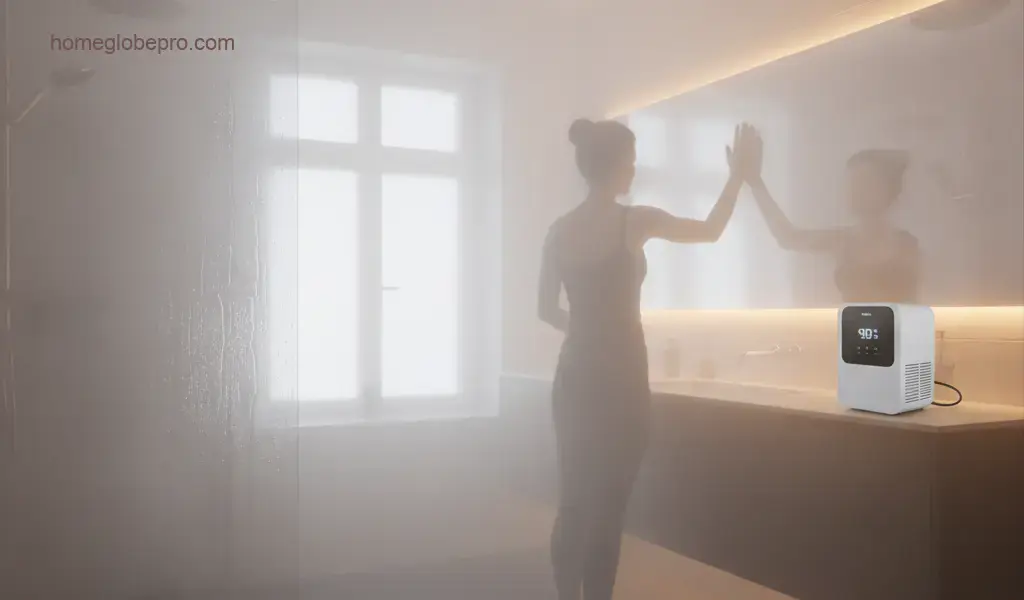
In the quest for a healthy and comfortable home, managing moisture, especially in bathrooms, is paramount. Excess humidity isn’t just an inconvenience; it can lead to significant health issues and structural damage.
When faced with a damp bathroom, many homeowners ponder the best solution: a dehumidifier or an exhaust fan. Let’s dive into the advantages of each, when to use them, and how to make an informed decision for your home.
The Problem with Bathroom Moisture
Bathrooms are naturally prone to high humidity due to hot showers and baths. Without proper ventilation, this moisture can linger, creating a breeding ground for mold and mildew.
Beyond the unsightly stains and musty odors, prolonged exposure to damp environments can have serious health implications.
Health Risks of Excessive Moisture
- Respiratory Issues: Mold spores can trigger allergies, asthma attacks, and other respiratory problems.
- Skin Irritation: Some individuals may experience skin rashes or irritation from mold exposure.
- Worsened Conditions: For those with compromised immune systems, mold can lead to more severe health complications.
- Structural Damage: Beyond health, moisture can damage paint, wallpaper, grout, and even the structural integrity of your home over time.
Understanding Bathroom Exhaust Fans
An exhaust fan is a ventilation device designed to pull moist, stale air out of a room and expel it outside, replacing it with drier air from other parts of the house. They are typically installed in the ceiling or wall of a bathroom.
Advantages of Exhaust Fans
- Direct Moisture Removal: They directly remove humid air from the source, preventing it from spreading.
- Odor Control: Excellent for eliminating unpleasant bathroom odors.
- Continuous Ventilation: Can be run during and after showers for effective moisture management.
- Space-Saving: Once installed, they are typically out of sight and don’t take up floor space.
When Exhaust Fans Excel
Exhaust fans are ideal for addressing immediate, high-volume moisture generated by showers and baths. They are most effective in bathrooms with a direct source of external ventilation and when used consistently during and after moisture-producing activities.
Understanding Bathroom Dehumidifiers
A dehumidifier works by drawing in moist air, cooling it to condense the water vapor, and then releasing drier air back into the room. The collected water is stored in a reservoir that needs to be emptied periodically.
Advantages of Dehumidifiers
- Whole-Room Moisture Reduction: They reduce the overall humidity level in the entire room, not just removing air from a specific spot.
- Portable Options: Many dehumidifiers are portable, allowing you to move them to different damp areas of your home.
- Effective in Stagnant Air: Can be very effective in bathrooms without adequate external ventilation or in basements where general humidity is high.
- Consistent Humidity Control: Can maintain a set humidity level over time.
When Dehumidifiers Excel
Dehumidifiers are particularly useful in situations where general ambient humidity is high, or when an exhaust fan isn’t sufficient to tackle persistent dampness. They are excellent for maintaining a consistent humidity level in a bathroom, especially if it’s prone to dampness even when not in use, or if it lacks proper ventilation.
Dehumidifier vs. Exhaust Fan: Which One is Better?
The “better” choice often depends on the specific circumstances of your bathroom and the nature of your moisture problem.
Situations Favoring an Exhaust Fan
- Immediate Post-Shower Moisture: For quickly removing the steam and humidity generated during a shower or bath.
- Odor Removal: If foul odors are a primary concern.
- Small Bathrooms: Often sufficient for smaller bathrooms with standard moisture levels.
- Existing Ventilation: If your bathroom already has a ducting system to the outside.
Situations Favoring a Dehumidifier
- Persistent Dampness: If your bathroom remains damp even hours after a shower, or if you notice condensation on walls and windows regularly.
- No External Ventilation: In bathrooms without an existing exhaust fan or the ability to vent outside.
- Basement Bathrooms: Basements often have higher ambient humidity, making a dehumidifier more effective.
- General Home Humidity: If other areas of your home also suffer from high humidity, a portable dehumidifier can be moved as needed.
The Hybrid Approach
In some cases, particularly in larger bathrooms or those with severe moisture issues, using both an exhaust fan and a dehumidifier can provide the most comprehensive solution. The exhaust fan handles the immediate moisture surge from showers, while the dehumidifier maintains optimal humidity levels throughout the day.
Making the Smart Choice for Your Home
Factors to Consider
- Bathroom Size: Larger bathrooms may benefit more from a dehumidifier or a powerful exhaust fan.
- Existing Ventilation: Assess if your bathroom has an existing, functional exhaust fan.
- Severity of Moisture: Is it just post-shower steam, or is there persistent dampness and mold growth?
- Climate: Homes in naturally humid climates might require more robust moisture control.
- Budget: Consider the initial cost and ongoing energy consumption of each option.
Why a Smart Choice Matters
Investing in the right moisture control solution is an investment in your health and your home’s longevity. By actively managing humidity, you prevent the growth of harmful mold and mildew, protect your property from damage, and create a more comfortable living environment.
Evaluate your specific needs, and don’t hesitate to consult with home maintenance professionals if you’re unsure about the best approach for your bathroom.