
At our core, we’re dedicated to helping you find the best devices and solutions for home maintenance, security, and automation. This includes comprehensive support for home and property access and exit systems, alongside essential services like maintenance, cleaning, and monitoring of your home and yard.
We cover everything from advanced garage door systems and robust home alarm systems to effective indoor space cleaning and meticulous yard maintenance. Today, we’re focusing on a common yet critical issue: mold and mildew.
What is Mold and Why Do Some Homes Have Mold and Mildew?
Mold is a type of fungus that grows in multicellular filaments called hyphae. These hyphae spread across surfaces, forming visible colonies. Mold reproduces by releasing spores into the air, which are invisible to the naked eye. These spores are ubiquitous, meaning they are present almost everywhere, both indoors and outdoors.
Homes often develop mold and mildew when conditions are right for their growth. The primary factors contributing to mold growth are moisture, warmth, and a food source. Common sources of moisture in homes include:
- Leaky roofs, pipes, or foundations.
- High indoor humidity from activities like showering, cooking, or drying clothes indoors.
- Condensation on windows or cold surfaces.
- Flooding or water damage that isn’t properly dried.
Mold can feed on almost any organic material found in homes, such as wood, drywall, fabric, carpet, and even dust.
Is There a Difference Between Mold and Mildew?
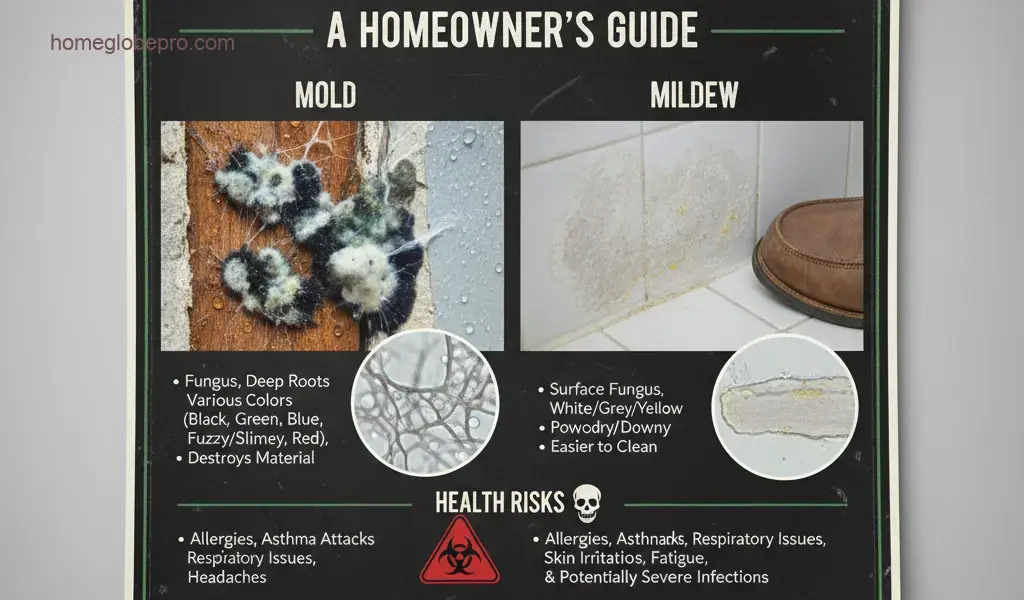
Yes, there is a difference, though the terms are often used interchangeably. Both are types of fungi, but they typically manifest differently:
- Mildew: Generally refers to certain types of mold that grow on flat surfaces and are often powdery or downy in appearance. It’s usually white, gray, or yellowish and can be found on shower curtains, windowsills, or fabrics in damp environments. Mildew is typically easier to clean than mold.
- Mold: Encompasses a broader range of fungal growths that can be fuzzy, slimy, or even leathery. It comes in various colors, including black, green, blue, and red, and can penetrate deeper into materials, making it more challenging to remove. Mold can also cause more significant structural damage and health issues.
Why Mold or Mildew Can Be Harmful for Human Health and What Type of Health Issues Man Can Have
Exposure to mold and mildew can pose significant health risks, especially for individuals with allergies, asthma, or compromised immune systems. Mold produces allergens, irritants, and in some cases, potentially toxic substances called mycotoxins.
Common Health Issues Associated with Mold Exposure:
- Allergic Reactions: The most common response. Symptoms include sneezing, runny nose, red eyes, skin rash, and nasal congestion.
- Asthma Attacks: For individuals with asthma, mold exposure can trigger severe attacks, leading to coughing, wheezing, and shortness of breath.
- Respiratory Problems: Even in non-allergic individuals, mold can cause irritation of the eyes, skin, nose, throat, and lungs.
- Hypersensitivity Pneumonitis: A rare but serious lung condition that can develop from prolonged or intense exposure to mold.
- Other Symptoms: Headaches, fatigue, and difficulty concentrating have also been reported in some individuals exposed to mold.
How to Avoid Mold and Mildew Growth in Our Home? Any Precaution Measures, and What to Do if Mold Grew Already.
Precaution Measures to Prevent Mold and Mildew Growth:
- Control Moisture: This is the most crucial step. Fix leaky roofs, windows, and pipes promptly.
- Maintain Low Indoor Humidity: Aim for humidity levels between 30% and 50%. Use dehumidifiers in damp areas like basements and crawl spaces.
- Ensure Proper Ventilation: Use exhaust fans in bathrooms and kitchens when showering or cooking. Open windows when weather permits to allow fresh air circulation.
- Clean and Dry Promptly: Clean and dry any water spills or wet areas within 24-48 hours to prevent mold growth.
- Insulate Pipes: Insulate cold surfaces like pipes to prevent condensation.
- Clean Gutters: Regularly clean gutters and ensure downspouts direct water away from the foundation.
- Avoid Carpeting in Wet Areas: Do not install carpet in bathrooms, basements, or other areas prone to moisture.
What to Do if Mold Grew Already:
- Identify and Address the Source of Moisture: Before attempting to remove mold, find and fix the water problem that caused it.
- Small Areas (less than 10 square feet): For small patches of mold, you can often clean it yourself.
- Protect Yourself: Wear gloves, goggles, and an N95 respirator mask to avoid inhaling spores.
- Clean with Appropriate Solutions: Use a solution of detergent and water. For non-porous surfaces, a diluted bleach solution (1 cup bleach per gallon of water) can be used, but never mix bleach with ammonia or other cleaners.
- Dry Thoroughly: After cleaning, ensure the area is completely dry to prevent regrowth.
- Large Areas or Persistent Mold: If the mold covers a large area, returns after cleaning, or if you suspect it’s in your HVAC system, it’s best to contact a professional mold remediation specialist.
In Case We Get Rid of Mold, What to Do Avoiding Mold to Get Back.
Once mold has been successfully removed, the key is to implement ongoing preventative measures to ensure it doesn’t return:
- Maintain Moisture Control: Continuously monitor and control indoor humidity levels. Use dehumidifiers as needed, especially in basements and crawl spaces.
- Regular Inspections: Periodically check for leaks in pipes, roofs, and around windows. Address any issues immediately.
- Improve Ventilation: Ensure all high-moisture areas, like bathrooms and kitchens, are adequately ventilated. Consider installing or upgrading exhaust fans.
- Keep Surfaces Clean and Dry: Regularly clean and dry surfaces, especially in areas prone to dampness.
- Proper Drainage: Ensure your home’s exterior drainage system (gutters, downspouts, and landscaping) directs water away from the foundation.
- Monitor Indoor Air Quality: Consider using an air purifier with a HEPA filter to help remove airborne mold spores.
- Professional Maintenance: For complex systems like HVAC, consider professional inspections and cleaning to prevent mold growth within the system.
By staying vigilant and proactive with these home maintenance practices, you can significantly reduce the risk of mold and mildew returning, ensuring a healthier and safer environment for your home and family.
 Winifred Gill