
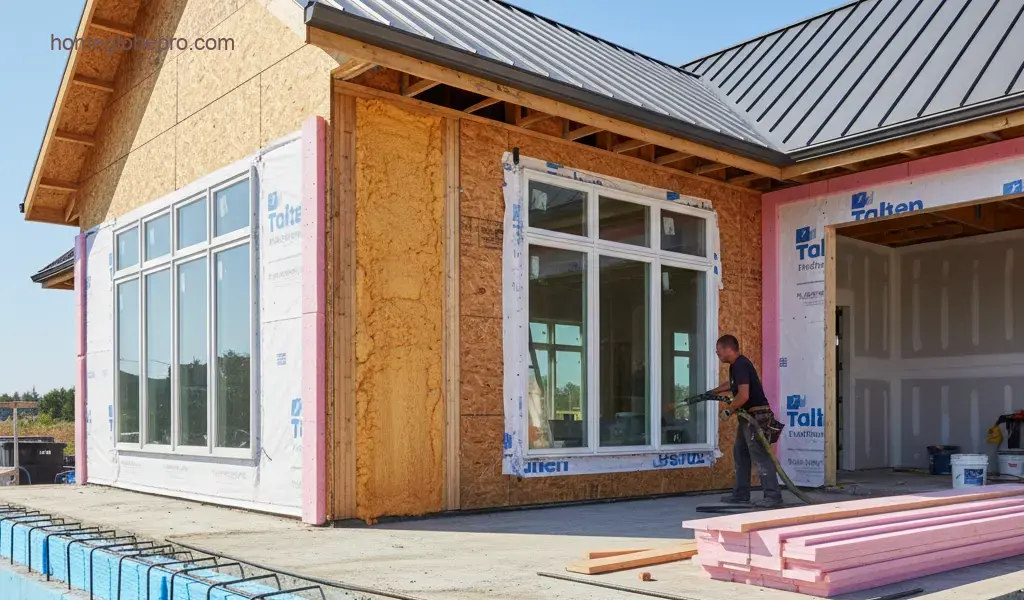
Building a home is a significant undertaking, and the materials chosen play a crucial role in its durability, efficiency, and overall comfort.
Over centuries, building practices have evolved dramatically, moving from traditional natural resources to innovative, engineered solutions.
This guide explores the essential components for house construction, highlights modern building materials, and compares them to their predecessors, emphasizing technological advancements, cost savings, improved insulation, and structural integrity.
What We Need to Build a House
Constructing a house requires a diverse range of materials and systems, each serving a specific purpose. Fundamentally, a house needs a strong foundation, a robust structural frame, protective exterior and interior finishes, and essential utility systems. Key components include:
- Foundation Materials: Concrete, rebar, waterproofing membranes.
- Structural Framing: Lumber (wood), steel, engineered wood products.
- Roofing: Shingles (asphalt, metal, tile), underlayment, trusses.
- Exterior Walls: Siding (vinyl, fiber cement, wood), brick, stone, stucco, sheathing, insulation.
- Windows and Doors: Frames (vinyl, wood, aluminum), glass (double/triple pane).
- Interior Finishes: Drywall, plaster, paint, flooring (hardwood, tile, carpet), trim.
- Plumbing: Pipes (PEX, copper, PVC), fixtures.
- Electrical: Wiring, outlets, switches, lighting fixtures, circuit breakers.
- HVAC: Ductwork, furnace, air conditioner, ventilation systems.
Modern Building Materials List
Contemporary construction leverages a variety of advanced materials designed for superior performance, sustainability, and ease of installation. Some prominent examples include:
- Engineered Wood Products (EWP): Glued laminated timber (glulam), laminated veneer lumber (LVL), oriented strand board (OSB), I-joists. These offer greater strength, consistency, and less waste than traditional lumber.
- Advanced Concrete: High-performance concrete (HPC), self-consolidating concrete (SCC), fiber-reinforced concrete (FRC). These provide enhanced strength, durability, and workability.
- Insulated Concrete Forms (ICFs): Hollow foam blocks filled with concrete, offering excellent insulation and structural integrity.
- Structural Insulated Panels (SIPs): Composite panels made of an insulating foam core sandwiched between two structural facings (e.g., OSB). They provide superior insulation and faster construction times.
- Fiber Cement Siding: A durable, low-maintenance alternative to wood siding, resistant to rot, pests, and fire.
- Low-E Glass Windows: Windows with special coatings that reflect infrared light, improving thermal performance and reducing energy consumption.
- PEX Plumbing: Flexible, durable, and corrosion-resistant cross-linked polyethylene piping, often replacing copper or PVC.
- LED Lighting: Energy-efficient and long-lasting illumination solutions.
- Smart Home Technology Integration: Systems for automated lighting, climate control, security, and access management.
Evolution of Building Materials
The journey of building materials reflects humanity’s continuous quest for better shelter.
- From Natural to Engineered: Historically, homes were built with readily available natural materials like mud, straw, wood, and stone. While sustainable, these often lacked consistent quality, durability against elements, and precise structural properties. Modern materials, conversely, are often engineered for specific performance metrics, offering predictable strength, fire resistance, and thermal properties.
- Durability and Longevity: Traditional materials like untreated wood were susceptible to rot, pests, and fire. Modern treatments and composite materials (e.g., pressure-treated lumber, fiber cement) offer significantly extended lifespans and reduced maintenance.
- Sustainability and Efficiency: While early natural materials were inherently sustainable, their processing and application were often inefficient. Modern materials focus on embodied energy, recycled content, and energy efficiency during the building’s operational life. For instance, high-performance insulation and energy-efficient windows dramatically reduce heating and cooling demands.
Advantages of Modern Building Technology
The advancements in building materials and techniques bring numerous benefits:
- Energy Savings: Superior insulation (SIPs, ICFs, spray foam) and high-performance windows drastically reduce energy consumption for heating and cooling, leading to lower utility bills and a smaller carbon footprint.
- Improved Insulation: Modern insulation materials offer higher R-values (thermal resistance) in thinner profiles, allowing for more living space and consistent indoor temperatures.
- Enhanced Static and Structural Integrity: Engineered wood products and advanced concrete formulations provide greater strength-to-weight ratios and more predictable structural performance, allowing for larger spans and more resilient structures against natural forces.
- Faster Construction: Prefabricated components like SIPs and pre-engineered trusses can significantly reduce on-site construction time and labor costs.
- Reduced Maintenance: Materials like fiber cement siding, metal roofing, and vinyl windows require less upkeep over their lifespan compared to their traditional counterparts.
- Fire and Pest Resistance: Many modern materials are treated or inherently resistant to fire, mold, and pests, improving safety and longevity.
- Acoustic Performance: Some modern materials and assemblies offer improved sound dampening, contributing to a quieter indoor environment.
Example of Using Materials for Building a House
Consider the construction of a contemporary, energy-efficient single-family home:
- Foundation: Poured concrete slab with a vapor barrier and perimeter insulation, reinforced with steel rebar for seismic stability.
- Walls: Exterior walls constructed with Insulated Concrete Forms (ICFs). These blocks are stacked, reinforced with rebar, and then filled with concrete, creating a highly insulated, strong, and sound-resistant wall system.
- Roof: Pre-engineered trusses for rapid framing, covered with OSB sheathing, a synthetic underlayment, and metal roofing for durability and longevity.
- Windows: Low-E, argon-filled double-pane vinyl windows to maximize thermal performance and minimize heat transfer.
- Exterior Finish: Fiber cement siding for its low maintenance, durability, and aesthetic versatility, combined with natural stone accents.
- Interior Framing: Engineered wood I-joists for floors and ceilings, providing consistent strength and reducing lumber waste.
- Insulation: In addition to the ICF walls, closed-cell spray foam insulation in the attic and rim joists for an airtight envelope.
- Plumbing: Entire house plumbed with PEX piping for its flexibility, ease of installation, and resistance to corrosion and freezing.
- Electrical: Modern wiring and a smart home hub integrated for automated lighting, climate control, and security systems.
- HVAC: High-efficiency heat pump system with energy recovery ventilation (ERV) for optimal indoor air quality and climate control.
This combination of materials results in a home that is not only structurally sound and aesthetically pleasing but also exceptionally energy-efficient, comfortable, and requires minimal maintenance for decades.
Conclusion
The landscape of home construction is continually evolving, driven by innovation and a demand for more sustainable, durable, and efficient living spaces. Modern building materials offer significant advantages over traditional methods, providing enhanced performance in terms of energy savings, structural integrity, and reduced maintenance. By embracing these advancements, homeowners can achieve greater comfort, lower operational costs, and contribute to a more sustainable future.
 Winifred Gill