
30 seconds summary
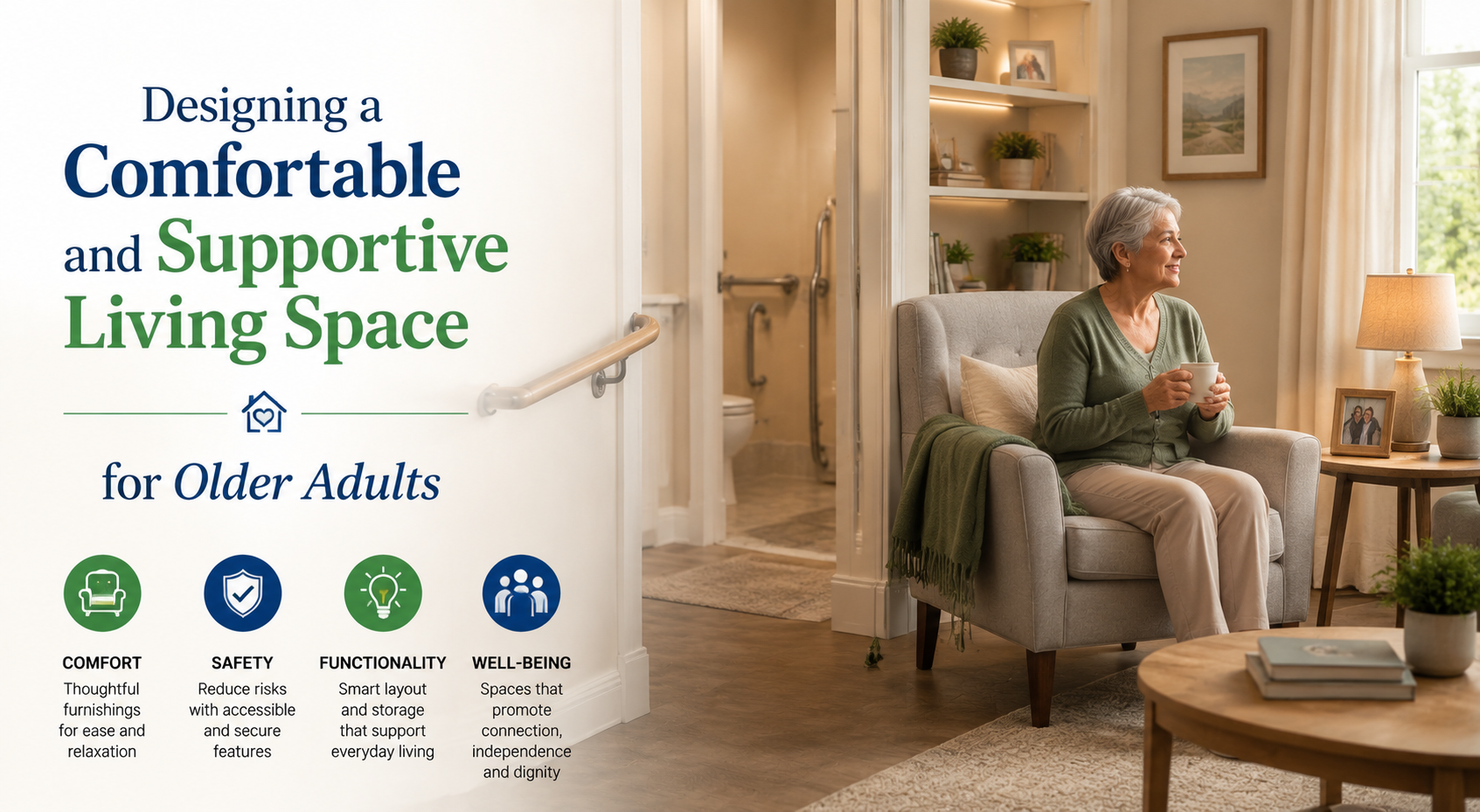
- A comfortable and supportive living space for older adults should focus on safety, accessibility, and emotional comfort. Clear walkways, good lighting, non-slip floors, grab bars, supportive furniture, and easy-to-reach items help reduce accidents and encourage independence.
- The home should also feel warm and familiar with personal belongings, natural light, and peaceful spaces.
- Technology and in home care services can provide extra support, helping older adults live safely, confidently, and with dignity.
Creating a safe, comfortable, and supportive living space for older adults is an important part of helping them maintain independence, dignity, and quality of life. As people age, their physical abilities, vision, balance, mobility, and daily routines may change. A home that once felt easy to move around in can gradually become difficult or even unsafe. Thoughtful design can reduce risks, support daily activities, and create an environment that feels peaceful, familiar, and welcoming.
Understanding the Needs of Older Adults
The first step in designing a suitable living space is understanding the unique needs of the older adult who will live there. Some people may need help with walking, while others may have arthritis, poor eyesight, memory problems, or reduced strength. The goal is not only to prevent accidents but also to make everyday life easier and more enjoyable.
A supportive home should allow older adults to move around freely, reach essential items, rest comfortably, and feel emotionally secure. It should also respect their personal preferences. Familiar furniture, family photos, favorite colors, and meaningful decorations can make the space feel warm and personal rather than clinical.
Safety as the Foundation
Safety should be the main priority in any living space for older adults. Falls are one of the most common risks, so the home should be arranged to reduce tripping hazards. Loose rugs, cluttered walkways, electrical cords, and slippery floors should be removed or secured. Furniture should be placed in a way that creates wide, clear paths from room to room.
Good lighting is also essential. Hallways, stairs, bathrooms, kitchens, and entrances should be well lit. Night lights can help older adults move safely during the night, especially between the bedroom and bathroom. Light switches should be easy to reach, and motion-sensor lights can be helpful for added convenience.
Comfortable and Accessible Furniture
Furniture should support both comfort and mobility. Chairs and sofas should be firm enough to make sitting and standing easier. Very low or overly soft furniture can be difficult for older adults to use. Chairs with armrests are especially helpful because they provide support when standing up or sitting down.
The bed should be at a comfortable height, allowing the person to place their feet flat on the floor when sitting on the edge. A sturdy bedside table should be within reach for glasses, medication, water, a phone, or a lamp. Keeping essential items close reduces unnecessary movement and supports independence.
Designing a Safe Bathroom
The bathroom is one of the most important areas to modify because it is often where falls occur. Non-slip flooring, grab bars near the toilet and shower, and a shower chair can greatly improve safety. A walk-in shower is often better than a bathtub because it reduces the need to step over a high edge.
Toilets may need to be raised to make sitting and standing easier. Handheld showerheads are useful because they allow the person to bathe while seated. Clear storage for toiletries also helps reduce confusion and keeps the space organized.
Creating an Easy-to-Use Kitchen
The kitchen should be designed for convenience and safety. Frequently used items should be stored at waist or shoulder height so older adults do not need to bend, stretch, or climb. Heavy pots, dishes, and appliances should be easy to access.
Appliances with simple controls are best. Good lighting over counters and the stove helps prevent accidents. If memory loss is a concern, automatic shut-off devices for stoves and clearly labeled cabinets can provide extra protection. A small table or chair in the kitchen can also allow the person to rest while preparing food.
Supporting Mobility Throughout the Home
A supportive home should make movement easy. Doorways may need to be widened for walkers or wheelchairs. Thresholds between rooms should be flat or low to prevent tripping. If stairs are difficult, a bedroom and bathroom on the main floor can make daily life much easier.
Handrails should be installed on both sides of stairways. Floors should be smooth but not slippery. If the older adult uses mobility aids, there should be enough space to turn and move without bumping into furniture.
Emotional Comfort and Familiarity
Comfort is not only physical. Emotional well-being matters too. Older adults often feel more secure in spaces that reflect their memories, routines, and identity. Family photos, favorite books, plants, artwork, and treasured objects can create a sense of belonging.
A calm color scheme, soft textures, and natural light can make the home feel relaxing. Windows should be easy to open and provide a pleasant view when possible. A comfortable chair near a window can become a favorite place for reading, resting, or watching the outdoors.
Technology and Supportive Tools
Modern technology can help older adults live more safely and independently. Medical alert systems, easy-to-use phones, video doorbells, medication reminders, and voice-controlled devices can provide reassurance. These tools should be simple and not overwhelming.
Technology can also support family members and caregivers. For example, reminder systems can help with appointments, meals, and medicine schedules. When combined with in home care services, a well-designed space can help older adults receive support while continuing to live in a familiar environment.
Encouraging Independence
The best living spaces do not make older adults feel helpless. Instead, they support independence. Items should be easy to see, reach, and use. Labels, open shelving, and simple organization can help people manage daily tasks with confidence.
Design should focus on dignity. Adaptations such as grab bars, ramps, or shower chairs can be chosen in attractive styles so the home still feels beautiful. A supportive space should feel like a home, not a hospital room.
Outdoor Areas and Entrances
Outdoor spaces should also be safe and accessible. Pathways should be even, well lit, and free of obstacles. Steps should have sturdy handrails, and ramps may be needed for easier access. A bench near the entrance can give older adults a place to rest while coming or going.
Gardens, patios, and balconies can support emotional health by encouraging fresh air, sunlight, and relaxation. Even a small outdoor sitting area can improve mood and reduce feelings of isolation.
Planning for Future Needs
A good design should consider both current and future needs. Aging is a gradual process, and abilities may change over time. Making flexible design choices can prevent major difficulties later. For example, installing blocking in bathroom walls allows grab bars to be added more easily in the future.
Families should review the home regularly and adjust it as needed. What works today may need to be changed later. Involving the older adult in these decisions helps them feel respected and in control.
Conclusion
Designing a comfortable and supportive living space for older adults requires attention to safety, accessibility, comfort, and emotional well-being. Simple changes such as better lighting, safer floors, supportive furniture, accessible bathrooms, and organized kitchens can make a major difference. The goal is to create a home where older adults can live with confidence, independence, and peace.
A well-designed home supports daily routines while reducing stress for both older adults and their families. Most importantly, it allows aging individuals to remain connected to the place they know and love, surrounded by comfort, dignity, and care.