
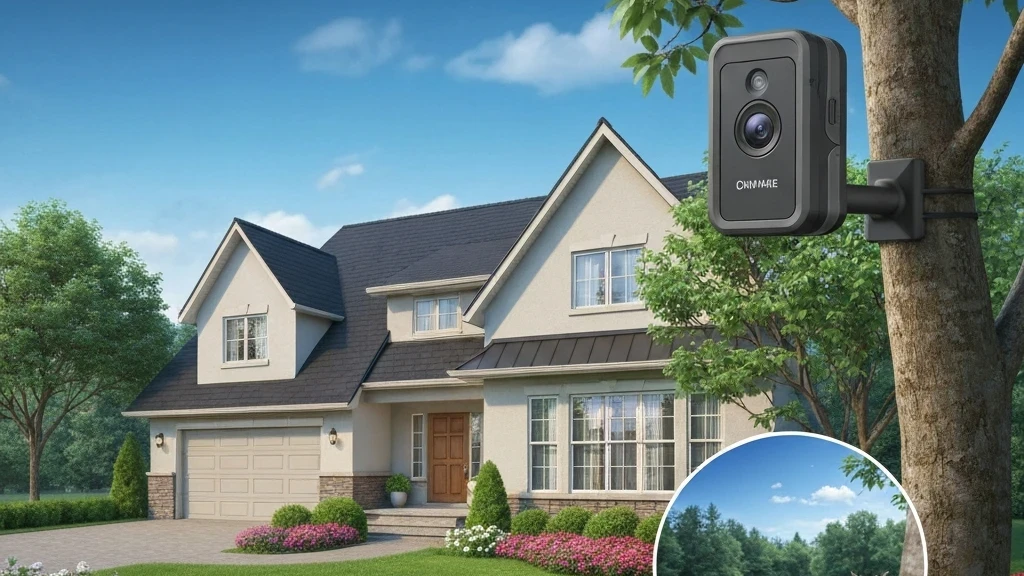
Ever looked at those rugged, camouflaged hunting cameras and thought, “Could that actually protect my home?” You’re not alone! With their impressive durability, long battery life, and motion-activated recording, trail cameras (or game cameras, hunting cams – whatever you call them!) are becoming a surprisingly popular DIY solution for supplementing home security.
But can a device designed to catch deer really catch a porch pirate or an unwelcome visitor? Let’s dive in and find out how you can turn a piece of outdoor tech into your home’s vigilant guardian.
Why Consider a Hunting Cam for Home Security?
Traditional home security systems are fantastic, but they often come with installation hassles, subscription fees, or require permanent wiring. This is where the versatile hunting cam steps in as a fantastic DIY alternative or supplement. Here’s why:
- Rugged & Weatherproof: Designed to withstand the elements (rain, snow, extreme temperatures) in the great outdoors, these cameras laugh in the face of harsh weather, making them ideal for exterior home monitoring.
- Incredible Battery Life: Many trail cams can run for months on a single set of AA batteries, significantly reducing the need for constant maintenance or external power sources. Some even support solar panels for virtually endless power.
- Motion-Activated Recording: Just like for wildlife, these cameras spring to life only when triggered by movement, saving battery power and storage space by not recording uneventful footage.
- Superior Night Vision: Equipped with powerful infrared (IR) LEDs, hunting cams provide crisp, clear night footage, often without a visible flash that could alert an intruder.
- Discreet & Portable: Their compact size and often camouflage design make them easy to hide and difficult for would-be intruders to spot. They can be moved and repositioned with ease.
- No Wi-Fi Needed (Mostly): Many models record directly to an SD card, meaning you don’t need a Wi-Fi signal at the camera’s location. Cellular models exist for remote monitoring, but they aren’t strictly necessary.
- Cost-Effective: Often, a good quality trail cam can be more affordable than a dedicated outdoor security camera with similar features, especially if you already own one.
Key Features to Look For in Your “Security” Trail Cam

Not all trail cams are created equal when it comes to home security. Here’s what to prioritize:
- Resolution (Video & Photo): Aim for at least 1080p video for clear identification. Higher megapixel photos are also a plus.
- Detection Range & Angle: A wider detection angle (e.g., 60-120 degrees) and a long detection range (e.g., 60-80 feet) will cover more ground.
- Trigger Speed: The faster the trigger speed (e.g., 0.1-0.5 seconds), the less likely you are to miss fast-moving targets.
- Flash Type (IR Emitters):
- “No-Glow” (Black Flash) IR: These emit completely invisible infrared light, making the camera virtually undetectable at night. Highly recommended for security.
- “Low-Glow” (Red Glow) IR: These emit a faint red glow when active at night, which can be visible if someone is looking closely.
- Connectivity:
- SD Card Only: The most common and budget-friendly. You retrieve footage manually.
- Cellular (4G/LTE): These models transmit photos/videos to your phone or email instantly via a cellular network (requires a SIM card and data plan). Ideal for remote monitoring but adds cost.
- Battery Type & Life: Lithium batteries perform better in cold weather. Look for models that can last 3-6 months or are compatible with external power (like a solar panel).
- Mounting Options: Ensure it comes with a strap, but also consider models with tripod mounts or wall brackets for more versatile placement.
Your DIY Setup Guide: Repurposing for Protection
Ready to turn your cam into a home security hero? Here’s how to do it effectively:
1. Strategic Placement is Key
Think like an investigator, not a hunter.
- Entrances: Front door, back door, garage door.
- Vulnerable Spots: Windows, gates, dark corners of your property.
- Valuables: Near sheds, boats, or cars.
- Angle: Position the camera to capture faces and distinguishing features, not just the top of someone’s head. Avoid pointing directly at strong light sources (like streetlights) to prevent overexposure.
- Height: Mount high enough (8-10 feet) to be out of easy reach, but low enough to get a good angle of people. Aim slightly downward.
2. Secure Mounting
- Trees/Posts: The strap provided is perfect for this. Cinch it tight!
- Walls/Eaves: Many trail cams have a standard 1/4″-20 tripod mount. You can buy cheap wall mounts designed for security cameras or action cameras that will work perfectly.
- Anti-Theft: Consider a lockbox or a Python cable lock to deter theft of the camera itself.
3. Optimize Settings for Security
Dive into your camera’s menu!
- Motion Sensitivity: Start on medium and adjust based on false triggers (leaves, small animals). You want to catch people, not squirrels.
- Video Length: Set to 15-30 seconds per clip to capture enough detail without filling up your SD card too quickly.
- Trigger Interval: Set a short interval (e.g., 5-10 seconds) between recordings so the camera can quickly re-trigger if motion continues.
- Time Stamp: Crucial! Ensure the date and time stamp are enabled and accurate. This is vital evidence.
- Loop Recording: If your camera has this feature, it will overwrite the oldest files when the SD card is full, ensuring continuous recording.
4. Power Management
- Alkaline vs. Lithium: Lithium batteries last longer and perform better in cold weather.
- External Power/Solar: If you have a cellular cam or want maximum uptime, look for models compatible with external 6V/12V power sources or small solar panels. This can make them truly set-and-forget.
5. Monitoring Your Footage
- SD Card Retrieval: For non-cellular cams, you’ll need to periodically retrieve the SD card and review footage on a computer. How often depends on traffic and battery life.
- Cellular Monitoring: If you have a cellular model, set up the accompanying app to receive alerts and view images/videos remotely. Remember to factor in the monthly data plan cost.
Pros & Cons: Is a Trail Cam Right for Your Home Security?
Let’s weigh the advantages and disadvantages.
Pros:
- Extreme Durability: Built to withstand harsh outdoor conditions.
- Exceptional Battery Life: Weeks to months on a single set of batteries.
- Stealthy Monitoring: No-glow IR makes them hard to detect at night.
- Wireless Freedom: No wiring or complex installation needed.
- Budget-Friendly: Often more affordable than dedicated outdoor security cameras.
- Portable: Easily moved for temporary monitoring needs (e.g., while on vacation).
Cons:
- No Live Stream (Mostly): Unless it’s a cellular model, you won’t get real-time viewing.
- No Two-Way Audio: Can’t communicate with visitors or deter intruders verbally.
- Limited Deterrence: No visible lights, sirens, or obvious presence to scare off intruders.
- Manual Footage Retrieval: SD card models require you to physically collect the card.
- Basic Features: Lacks advanced analytics (person detection, facial recognition) found in high-end security cameras.
- Cellular Costs: If you opt for remote monitoring, monthly data plans add up.
When is a Trail Cam the Right Choice for Your Home Security?
A hunting camera might be your perfect security solution if:
- You have a remote property or an area without easy access to Wi-Fi or power.
- You need temporary monitoring (e.g., while away, or for a specific issue).
- You want to monitor specific, hard-to-reach spots where traditional cameras are difficult to install.
- You’re on a tight budget but need reliable outdoor surveillance.
- You’re looking for a discreet monitoring solution that won’t draw attention.
- You want to supplement an existing security system by covering blind spots.
Final Thoughts: The Unsung Hero of DIY Security
Hunting cameras, once solely the domain of wildlife enthusiasts, are proving to be incredibly versatile tools for DIY home security. While they might lack some of the advanced features of dedicated security systems, their ruggedness, exceptional battery life, and powerful night vision make them an excellent, cost-effective, and discreet option for keeping an eye on your property.
So, if you’ve got a trail cam gathering dust, or you’re considering a new purchase, don’t just think about the deer in the woods – think about the peace of mind it can bring to your home! With a little DIY ingenuity, you can empower your property with vigilant, silent surveillance.